Chinese vs. Western governance: The case of COVID-19
During January the onslaught in the Western media, notably the US and the UK, against the Chinese government’s handling of the Covid-19 epidemic, was merciless. The Chinese government stood accused of an inhumane attitude towards its people, secrecy, a cover-up, and an overwhelming concern for its own survival above all other considerations. The actual evidence was thin bordering at times on the threadbare but this made little difference to the venom and bile of the assault.
The Chinese version of this article is available here.
The tide has turned. There is rapidly growing worldwide respect for what China has achieved in its fight against the coronavirus
Interview with Global Times (English edition)
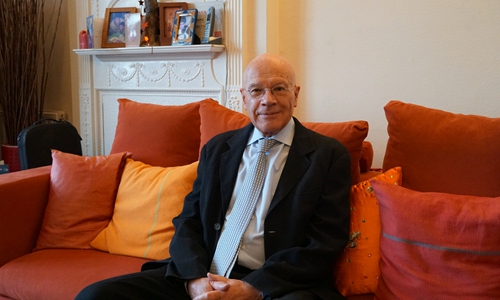
1. After more than a month since the outbreak of the coronavirus in China, the epidemic has been coming under control inside the country. How do you evaluate China’s efforts in the fight against the epidemic?
Judging by the situation now, China seems to have got on top of it, with the number of new cases declining. By and large, it looks as if China has managed to restrict the worst of it to Wuhan in Hubei Province. I think that the situation is looking encouraging.
The interview with Global Times (English edition) also appeared subsequently in the Chinese edition of Global Times, which follows below:
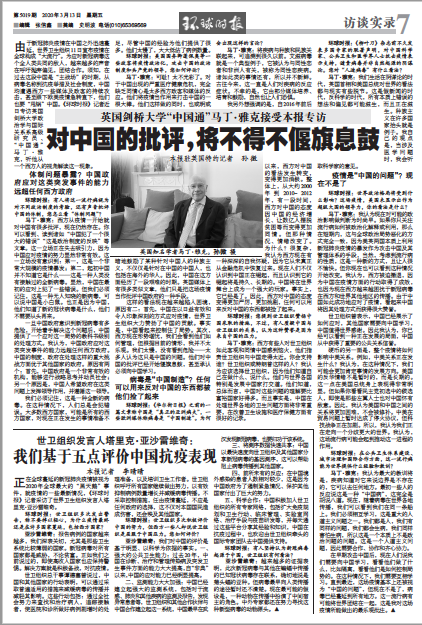
对中国的批评,将不得不偃旗息鼓
由于新冠肺炎疫情在中国之外迅速蔓延,世界卫生组织11日宣布疫情在全球构成“大流行”。为应对新冠病毒这个全人类共同的敌人,越来越多的声音在呼吁抛弃偏见,团结合作。须知,在过去这段中国是“主战场”的时期,从病毒名称到抗疫举措及社会制度,中国均遭遇西方一些媒体及政客的持续攻击,甚至眼下欧美疫情急转直下,他们也要“甩锅”中国。《环球时报》记者近日专访英国剑桥大学政治学与国际关系系高级研究员、“中国通”马丁·雅克,听他从一个西方人的视角解读这一现象。
This decade belonged to China. So will the next one
Martin Jacques assesses the role and continuing rise of China in the decade 2010 to 2019 in an article published in the Guardian on 31 December 2019.
By 2010, China was beginning to have an impact on the global consciousness in a new way. Prior to the western financial crisis, it had been seen as the new but very junior kid on the block. The financial crash changed all that. Before 2008 the conventional western wisdom had been that sooner or later China would suffer a big economic meltdown. It never did. Instead, the crisis happened in the west, with huge consequences for the latter’s stability and self-confidence.
Martin Jacques speaks forthrightly on the crisis in Hong Kong and what needs to be done.
Produced by T-House for CGTN.
China, The Philippines and a New World Order
Martin Jacques delivered the Keynote Speech, titled ‘China, The Philippines and a New World Order’, at a special conference organised by the Chamber of Mines of the Philippines to a specially invited audience of leading government, media, and business figures, and ambassadors, in Manila on 10 September 2019.
Watch the talk below:
Duterte’s ‘pivot to China’
In early September, Martin Jacques spent several days in Manila, giving a series of talks and interviews. Here he joins the inimitable Karen Davila on Headstart to talk about the ongoing US-China trade war, China’s handling of the situation in Hong Kong and why he thinks President Duterte’s pivot to China is the right decision.
Watch the interview below:
Beginnings of a New World Order: The Rise of China
Martin Jacques delivered the Keynote Speech, titled ‘Beginnings of a New World Order: The Rise of China’, at This is Tomorrow, a Symposium organised by the University of Bath Institute for Policy Research (IPR).
The sessions was chaired by Professor Nick Pearce, and held 12 September 2019 at Arts Lecture Theatre, The Edge, University of Bath.
Zhang Weiwei and Martin Jacques on Hong Kong
16/09/19, China Dragon TV Official
During a recent visit to Shanghai, Martin Jacques joined Professor Zhang Weiwei and other experts to discuss the recent unrest in Hong Kong on the popular current affairs programme ‘China Now’.
Watch the full programme below:
Chinese governance highly distinctive, remarkably effective
Martin Jacques discusses Chinese governance with People’s Daily Online on 5 July 2019.
Watch the interview below:
No time for wishful thinking
25/06/19, China Daily Forum at the 2019 G20 Osaka summit
This is the transcript of a talk Martin Jacques gave at a Forum organised by China Daily at the Osaka G20 on 25 June 2019.
There is no point in building castles in the air. We must live in the here and now. I am sure the great majority of us wish we were not where we are. We would prefer that the era, beginning in the late 1970s, of globalisation and multilateralism, and that was characterised by relative stability and cooperation in the relationship between the US and China, was still in place. It is not. And it will not return for a very long time. The reason for the breakdown in that old order is profound, as is invariably the case with great historical shifts. We need to understand the causes.
When China and the US Collide:
The End of Stability and the
Birth of a New Cold War
This article was published in JPI Peace Net and presented to
the Jeju Forum for Peace and Prosperity in May 2019, South
Korea, in the opening plenary session “Destined for War?:
The Future of US-China Relations and its Implications for the
Korean Peninsula”. Speakers included Martin Jacques,
Prof. Graham Allison and Mr. Li Zhaoxing. The panel was
moderated by Prof. Chung-in Moon.

Forty years of relative stability in the US-China relationship are
at an end. That stability had depended on two things. First, a
huge inequality in the relationship, with the US by far the
dominant partner. Second, the long enduring American illusion
that the only future for China, if it was to be successful, was to
become like America. History has undermined both
propositions. Over a period of 40 years, the most remarkable
in global economic history, China overtook the US economy
and is now 20% larger in terms of GDP purchasing power
parity. Furthermore, it is patently clear to everyone that
China is never going to be like the US. The US hugely
miscalculated, a victim of its own hubris. Its response is
a volte face: a desperate search to find ways of reversing
China’s rise or at least slowing it down. The US is right
that the underlying reason for China’s rise is economic.
So it is logical to start with a trade war. But it will not
stop at that. It will encompass all aspects of their
relationship. We are watching the birth of a new cold war.
And the most likely scenario is that it will last a long time,
my guess is at least twenty years.
32nd Annual Camden Conference: Is This China’s Century?
Martin Jacques delivered the keynote address at the 32nd
Annual Camden Conference in Camden, Maine, US on
February 22, 2019. The talk was titled “What China
Will Be Like as a Great Power”.
Watch the speech below:
Why is the US moving
toward a new Cold War
against China?
Martin Jacques discusses the West’s fear of China’s progress,
its transformed position on the world stage, and what kind of
great power it will become. One-to-one interview with Liu Xin
on The Point (CGTN) on 22 May 2019.
Watch the interview below:
Interview with Channel 4:
US/China Trade War
Dr Yu Jie and Martin Jacques discusses the US/China Trade
War with Jon Snow on Channel 4 News on 13 May 2019.
Watch the interview below:
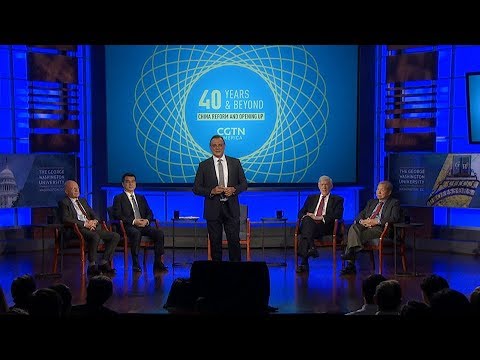
Martin Jacques was on a distinguished panel of guests assembled by CGTN, to discuss China’s reform and opening-up policies, and the China-US relationship, during a special Town Hall program recorded at the George Washington University. The panel included Zhou Jingxing, minister-counselor and chief of Political Section, Chinese Embassy in U.S., Yukon Huang, Senior Fellow with the Asia program at Carnegie Endowment for International Peace and author of “The China Conundrum” and Robert Hormats, former U.S. Under Secretary of State and Vice-Chairman at the Kissinger Associates.
People’s Daily: On the 40th Anniversary of Reform and Opening Up
The following article was written by Martin Jacques for People’s Daily on the subject of the 40th Anniversary of Reform and Opening Up.
A Chinese translation of the article was published in People’s Daily on 15th January 2019.
When Deng Xiaoping launched the special economic zones in Guangdong and Fujian provinces in 1978, encouraging farmers to sell some of their produce in the newly created markets, and then seeking foreign investment in the new zones, nobody in the world, not even Deng himself, could have imagined that China would, in a handful of decades, experience the most remarkable economictransformation in human history. It is a wonderful story; and from such humble origins. China, of course, is intimately familiar with this story, but the western world still remains largely ignorant of it. More
Read the Chinese version of the article here.
Can the West’s democracy survive China’s rise to dominance?
The following article by Martin Jacques was a contribution to the debate ‘Should the West worry about the threat to liberal values posed by China’s rise?‘, part of Economist Debates. It was originally published on the Economist website.
For long the West has thought that history is on its side, that the global future would and should be in its own image. With the end of the cold war and the implosion of the Soviet Union, this conviction became stronger than ever. The future was Western; nothing else was imaginable. Of course, already, well before the end of the cold war, in 1978 to be exact, China had started its epic modernisation such that, in the annals of history, 1978 will surely prove to be a far more significant year than 1989. During China’s rise, hubris continued to shape the West’s perception and understanding of China. As the latter modernised it would become increasingly Western, it was supposed: Deng’s reforms marked the beginning of the privatisation and marketisation of the Chinese economy—its political system would in time become Western, otherwise China would inevitably fail.
The Challenge that the CPC presents the World as a Very Different Form of Governance in the Era of Globalisation
24/11/18, Third Symposium on International Ccpology
This talk was delivered by Martin Jacques at the Third Symposium on International Ccpology at Fudan University on November 24 2018.
There is a profound ignorance in the West about Chinese governance. The dominant attitude is still essentially dismissive. There are two main reasons for this. The first is that Chinese governance is based on entirely different values and principles to those that inform Western governance. The idea of Western democracy has been the main calling card of the West since 1945 and, for countries like the US and the UK, much longer. In Western eyes, the legitimacy of any political system is measured by the extent to which it approximates to universal suffrage, a multi-party system, the separation of powers and the rule of law. Such is the commitment to these notions that it is not an exaggeration to suggest that Western democracy is viewed in terms that are akin to the ‘end of history’. They are regarded as indispensable for good governance and cannot be improved upon in their essentials. The second reason is the legacy of the cold war, which continues to exercise a profound influence on Western thinking – and elsewhere too, though usually to a rather lesser extent. Communism and Communist Parties are still deeply associated in the western mind with the history, experience and fate of the CPSU.
Talk on Belt and Road: Abu Dhabi Ideas Weekend 2018
Martin Jacques delivered the talk below at the Abu Dhabi Ideas Weekend in March 2018. The talk was on how China’s Belt & Road Initiative will change the world.
In March 2018, the Abu Dhabi Ideas Weekend welcomed some of the brightest and most interesting minds from the UAE and around the world to discuss four of the most important moonshot challenges facing our planet. The event was inspired by the world-famous Aspen Ideas Festival that has been taking place in Colorado since 2005, as a place for scientists, artists, politicians, business leaders, historians and educators to discuss some of the most fascinating ideas of our time. The 2018 Abu Dhabi Ideas Weekend topics included: “Polarisation: Bridging the gaps”, “Cancer: An end in sight?”, “Artificial Intelligence: Our super-intelligent friend?” and “The Modern Silk Road: A new era of globalisation”.
In conversation with Martin Jacques is Julian Gewirtz, a Fellow in History and Public Policy at the Harvard Kennedy School of Government.
TED Talk: Understanding the Rise of China
This hugely successful TED talk in London has now had over 2 million views. Martin Jacques asks: How do we in the West make sense of China and its phenomenal rise?
China’s ‘New Era’: Progress or Jeopardy?
In October 2017, China’s 19th Party Congress adopted the ‘Xi Jinping Thought on Socialism with Chinese Characteristics for a New Era’ – giving the Chinese leader a status unmatched except by Mao Zedong and Deng Xiaoping.
George Magnus, author of the new book, ‘Red Flags: Why Xi’s China is in Jeopardy’, joined the Asia House Bagri Foundation Literature Festival to discuss the implications of this “new era” for China. He was in conversation with Martin Jacques, author of the global bestseller ‘When China Rules the World: The Rise of the Middle Kingdom and the End of the Western World,’ and Dr Yu Jie, Head of China Foresight at LSE.
Sinologist sees China changing the world
The following article was published in China Daily on October 10 2018.
China’s rapid growth since the reform and opening-up process began in 1978 has not only been an economic miracle for the nation, but it has also offered a new development model for other emerging economies, said Martin Jacques, author of the global bestseller When China Rules the World.
In doing so, China has proved the inaccuracy of the previous consensus that the Western model of development was the only path to success.
Effectively, Jacques said, China has inspired other emerging countries to explore development paths that are suitable for their own situations.
Martin Jacques on China: 8 part series
Part 8: Why are we threatened by the rise of China?
‘One reason people feel threatened by the rise of China is because actually they are very ignorant about China.’
In Part 8 of Martin Jacques on China (presented by CGTN), Martin Jacques wonders whether the West will ever make sense of the rise of China, and explains that concerns about a more aggressive China mainly arise from the Cold War hostility and Western ignorance.
Part 1: How does China’s global outlook differ from the West’s?
Part 2: Can China transform its economy?
Part 3: How has China maintained its fast-paced reform agenda?
Part 4: How will the CPC continue to innovate?
Part 5: Is the Belt and Road China’s Marshall Plan?
Part 6: Is China’s anti-corruption drive unprecedented?
Part 7: How to tackle Hong Kong’s problems?
‘The man of the moment in China’
(Double click on video for full screen)
Prescient author now rules the roost
17/11/17, China Daily, all editions worldwide
1/12/17, Daily Telegraph
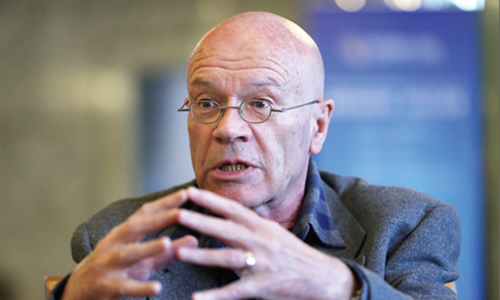
Martin Jacques, the journalist and academic, is now seen by many as the man of the moment in China.
Click here to access PDF of the full article, published in China Daily on 17th November 2017. The article was written by Andrew Moody.
Let’s celebrate reform’s 40th anniversary
The following article by Martin Jacques appeared in China Daily, 20th January 2018.
As momentous historic events go, China’s reform period was relatively unheralded. Little did anyone realize at the time – probably no one, in fact – that 1978 would enter the history books as one of the most important years in modern history.
We should not be surprised. At the time, the Chinese economy was a mere one-twentieth of the size of the US economy, with a per capita GDP roughly on a par with that of Zambia, lower than half of the Asian average and lower than two-thirds of the African average. China’s impact on the world was very limited, even in East Asia.
One to One Interview with Martin Jacques
On October 19th, Martin Jacques did this one-to-one interview on China in Washington DC with Anand Naidoo, the host of The Heat, CGTN America’s flagship current affairs programme.
Part One:
Part Two:
CCTV Profile
This short profile was broadcast on CCTV News and other CCTV channels in May 2016.
Double click for full screen.
Martin Jacques and Shashi Tharoor discuss China and India
21/4/16 – Credit Suisse Global Megatrends Conference
Watch Martin Jacques in conversation with Shashi Tharoor, exploring what will define the progress of China and India over the coming years. As part of the Credit Suisse Global Megatrends Conference in Singapore. Moderated by Martin Soong (CNBC Asia).
Double click for full screen.
For a report on the discussion please see this article by Jo-ann Huang in The Straits Times.
Harinder Veriah Trust
Martin Jacques is chairman of the Harinder Veriah Trust, a charity providing vital support to underprivileged girls in Malaysia, helping them to get the best from their schooling and achieve an education that will transform their lives.
To learn more about the trust watch the video below and visit their website.
University of Melbourne – When China Rules the World
On 18th September 2012, Martin Jacques gave a talk at the University of Melbourne as part of a public lecture series organised by Asialink, questioning ‘Australia’s Role in the World’. This highly popular YouTube video of his lecture has over 200,000 views.